


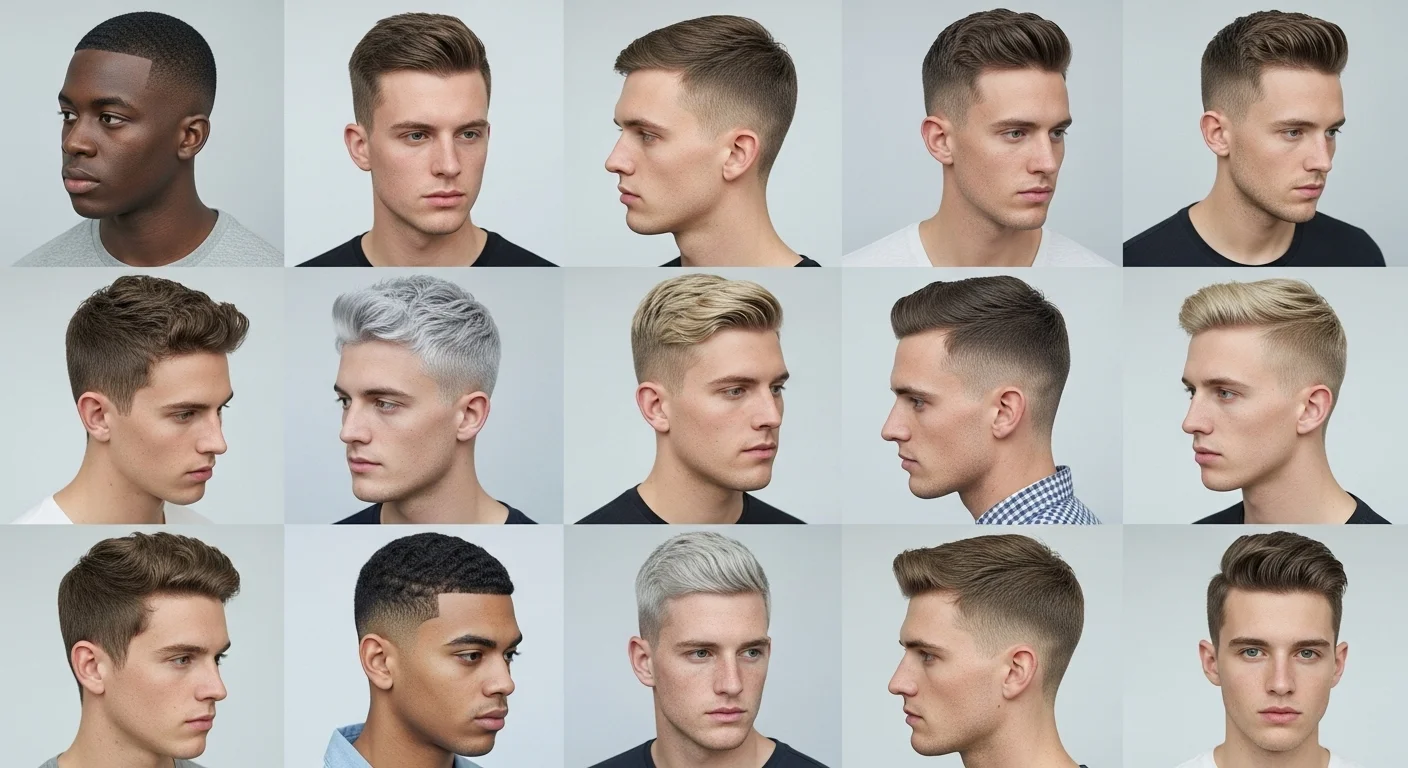
Crew cuts are the quiet workhorses of men’s grooming: deceptively simple, endlessly adaptable, and somehow always relevant. What began as a practical athletic cut became a staple in every man’s repertoire because the crew cut works with different hair densities, face shapes, and personal styles. Whether you want something aggressively low-maintenance or a version with subtle modern flair, the crew cut can be tailored with fades, textures, hard parts, and length tweaks to suit a businessman, a student, or a streetstyle aficionado alike. It’s understated but never boring when executed with intention and the right products.
At their core, crew cut hairstyles for men prioritize clean lines and a neat silhouette, but the beauty lies in the variations: from the ultra-military high-and-tight to a textured, piecey crew that reads fashion-forward. The cut is especially useful for guys who want a masculine, no-nonsense look that still allows a touch of personality — whether that’s a cheeky fringe, a sculpted quiff, or a deliberately rugged finish. Barbers love it for its precision, guys love it for how quickly it comes together in the morning, and stylists love it because it pairs well with beards, fades, and every kind of wardrobe from tailored suits to denim jackets.
In this guide, you’ll find 25 crew cut hairstyles for men presented with styling tips, face-shape guidance, and maintenance pointers so you can translate the look in the chair to your daily routine. Each entry explains why the version works, how to style it at home, and which hair types or facial features it flatters most. If you’re looking to update your signature look without committing to long hair, one of these crew cut ideas will give you the edge you want while keeping things clean, masculine, and highly wearable.
1. Classic Crew Cut
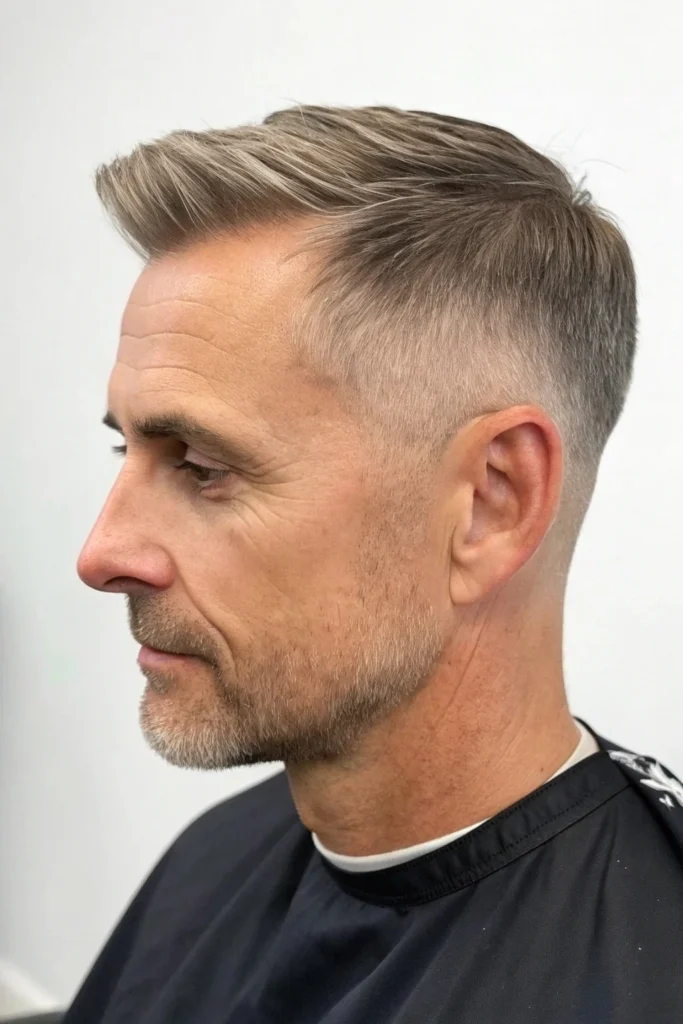
The classic crew cut is the archetype — short on the sides and back with slightly longer hair on top to give the head a clean, tapered shape that emphasizes masculine bone structure. It reads military-smart but never austere, and it flatters nearly every face type because the tapering reduces bulk around the cheeks while the top length provides a controlled silhouette that feels composed and confident. This look is excellent for men who want a polished appearance that doesn’t require fiddly styling; it’s a reliable haircut that reads as intentional even when you’re in a rush.
To style a classic crew cut, a small amount of lightweight cream or matte paste warmed between the fingers and worked through the top is enough to define the natural direction of growth without adding shine or weight. This cut suits thin to medium hair best, and it’s especially flattering on men with square or oval faces where the angular lines of the haircut complement the jawline; regular trims every three to five weeks will keep the taper crisp and the top from losing its sculpted shape.
2. Textured Crew Cut
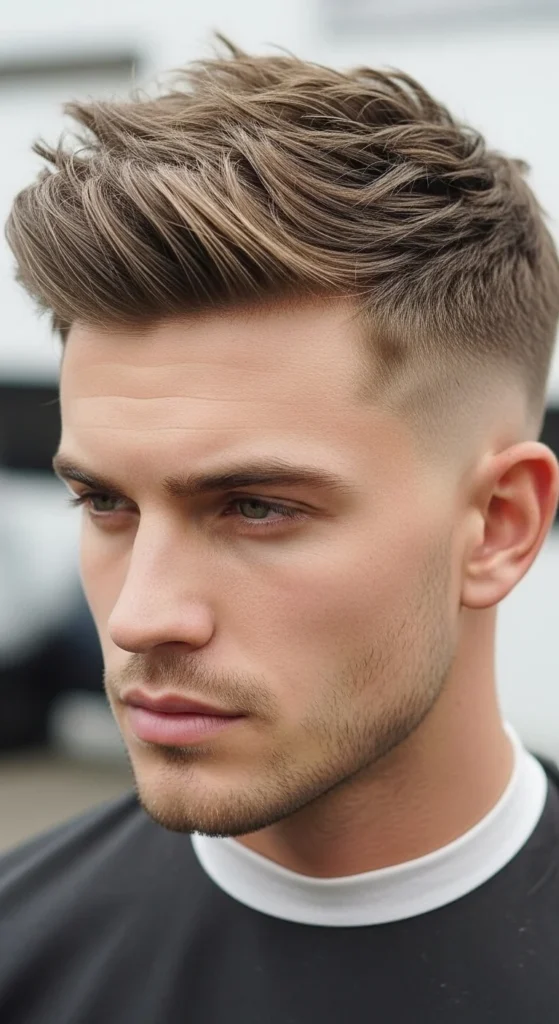
The textured crew cut takes that classic template and injects movement through careful point-cutting and texturizing on the top, resulting in a lived-in, touchable finish that looks effortless but is expertly crafted. The texture prevents the hair from lying flat, creating tiny peaks and valleys that add visual density — a major advantage for men with fine hair who want the illusion of thickness without adding length. This version also works well for trend-conscious men who like a little roughness in their grooming rather than a clinical finish; it reads modern, tactile, and just the right amount of undone.
Styling a textured crew involves applying a texturizing powder or salt spray at the roots and working through with your fingers while blow-drying on a low heat to lift the strands; finish with a matte clay for separation and hold. It’s ideal for men with straight to slightly wavy hair and adds a rugged charm to rounder face shapes by breaking up uniformity, but remember that texture needs periodic maintenance — ask your barber for layering and point cuts rather than blunt clipping to preserve that piecey, volumized look.
3. Crew Cut with Fade
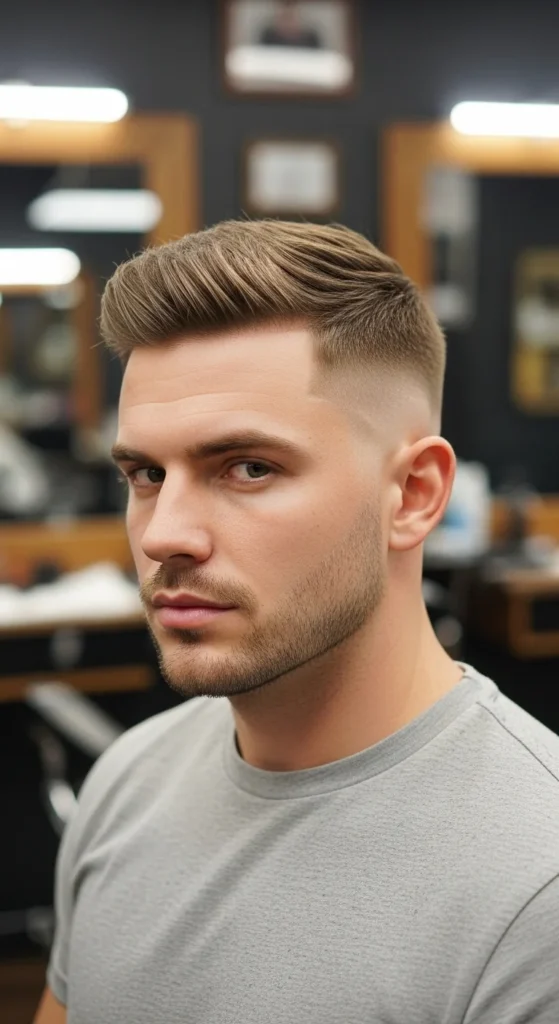
The crew cut with a fade modernizes the traditional silhouette by creating a soft or high-contrast blend from the top down to skin level; the fade sharpens the look and adds a contemporary edge that makes the top pop visually. Because the fade reduces the visual mass on the sides, the remaining top appears fuller and more sculpted, which is useful for men who want a cleaner profile and a more defined hairline. This variant bridges classic and contemporary styling well — you can go subtle with a low fade or bold with a high skin fade depending on how pronounced you want the contrast to be.
To style, use a light hold cream and elevate the front slightly for shape, keeping the sides neat so the fade remains the focal point; regular barber visits every two to four weeks will maintain that crisp gradient. This look suits most face shapes but is particularly powerful on oval and square faces where the carved sides accentuate the jaw and cheekbones, making it a popular choice among professionals and creatives who like a sharp, fashionable aesthetic.
4. Crew Cut with Hard Part
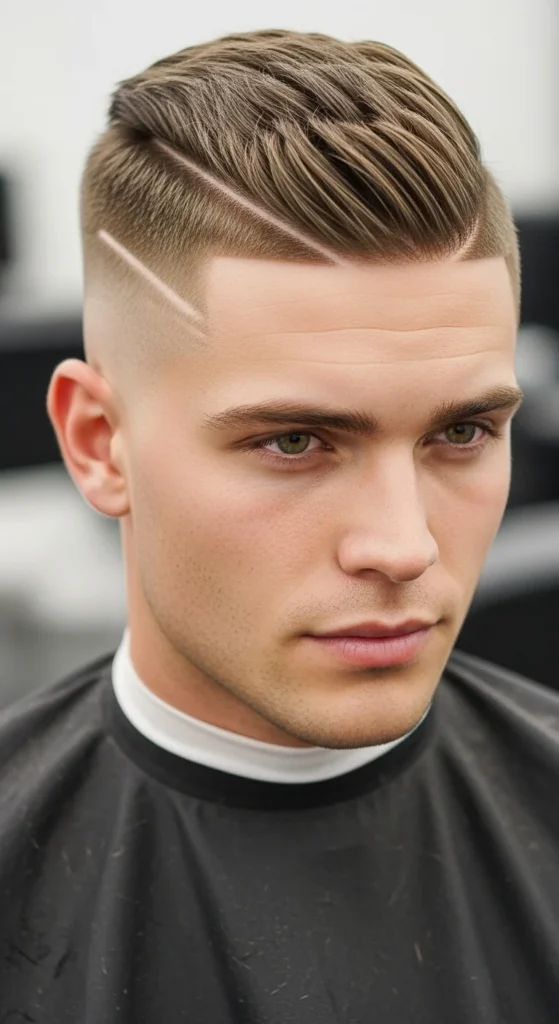
Adding a hard part to a crew cut gives the haircut instant architecture — a razor-defined line separates the top’s flow from the clean, tapered side and introduces a graphic element that reads editorial and precise. The hard part is an excellent choice if you want a minimal but unmistakable detail that elevates a simple cut into something tailored and intentional; it works well with both longer and shorter crew tops and pairs beautifully with fades and tapers. This look is ideal for guys who favor clean grooming with a touch of personality, and it brings structure to unruly hair by forcing a direction to the style.
Styling involves outlining the part daily with a small comb and a dab of medium-hold pomade to keep the separation visible; the razor line will need refreshing every two to three weeks to remain sharp. Men with straight or slightly wavy hair find the hard part easiest to maintain, and those with prominent foreheads or asymmetrical growth patterns benefit from how the line organizes the hair into a flattering, directional shape.
5. Crew Cut with Beard

Pairing a crew cut with a beard creates a strong contrast that accentuates the face rather than hiding it — the short, controlled hair on the head and the fuller texture on the face are complementary opposites that together project maturity and purpose. This pairing works cross-functionally: a trimmed, short beard softens the severity of a military-inspired crew cut, while a full, sculpted beard balances a softer crew by adding weight to the lower face. It’s a versatile move that suits men who want to experiment with facial hair without sacrificing a tidy, low-maintenance hairstyle.
To maintain balance, ensure the beard’s neckline and cheeks are meticulously groomed to match the haircut’s clean lines; use beard oil to keep facial hair soft and define the cheek lines, and consider a slightly longer top on the crew cut if your beard is dense to avoid a top-heavy look. This combination is flattering across face shapes—particularly for oblong and triangular faces—because the chin weight created by the beard adds proportion that the crew cut alone might not provide.
6. Ivy League Crew Cut

The Ivy League crew cut is a smarter, longer cousin of the classic that leaves enough length on top to part or sweep while retaining the tidy tapered sides that define crew cuts. It’s preppy without being precious and works especially well for men who want a collegiate, refined aesthetic that transitions seamlessly from the boardroom to casual weekend plans. The additional top length allows for styling versatility—sweeping, combing, or adding a soft quiff—giving the haircut a slightly more polished silhouette compared to ultra-short variants.
Styling the Ivy League involves blow-drying the top with a brush for a subtle lift and finishing with a creamy pomade or light paste for a flexible hold that still allows movement. Men with straight or fine hair will appreciate this version because the extra top length allows for more pronounced shape and rhythm; regular trims that preserve the taper while keeping the top workable are essential to maintain its smart profile.
7. Short Textured Crew

The short textured crew takes minimalism to stylish extremes by combining a very short top with texturizing techniques that create density without length. The advantage here is the ultra-easy morning routine — a quick towel-dry and fluff with a finger-style paste yields an appearance that’s both rugged and refined. This approach is excellent for men with active lifestyles or those who prefer not to fuss with their hair but still want a manipulated, fashionable look rather than a flat, boxy cut. It’s a fresh, approachable take on crew cuts that fits casual and formal wardrobes.
To style, apply a dusty matte paste and run your fingers through the top to encourage separation, keeping the sides neat to contrast the textured crown. This cut suits most men but is notably effective on finer hair where the texturing can fabricate the illusion of density; because the hair is short, maintenance is limited to regular trims to avoid losing the intended shape.
8. Long Crew Cut (Extended Top)

The long crew cut extends the traditional top length to give more styling options while keeping sides relatively short; think of it as the meeting point between a classic crew and a short crop. The extra length allows for lift, a gentle sweep, or even a textured quiff while preserving the tidy contours that define the crew aesthetic. For men who love the neatness of a crew cut but also crave versatility, this longer top version delivers the best of both worlds—stylish adaptability without going full medium-length territory.
Styling involves using a volumizing mousse at the roots and a medium-hold cream to sculpt the top into the desired direction, with the added benefit that the longer top camouflages minor imperfections in hair density. It works well for those with straight to slightly wavy hair and is particularly flattering on oval faces where the added height enhances proportion, although it requires slightly more maintenance and product than shorter crew variants.
9. Messy Crew Cut

A messy crew cut intentionally plays with an imperfect, undone finish to make the haircut feel spontaneous and contemporary rather than buttoned-up. The top is left with uneven lengths and soft choppy layers to create movement and a lived-in texture that reads youthful and relaxed. This version is fantastic if you want a crew cut that doesn’t read military but instead channels street-smart energy and approachability—perfect for creative fields and casual wardrobes.
To achieve the messy crew, use a sea salt spray to add grit and a matte fiber to tousle and separate the strands; dry with your fingers rather than a comb to maintain that casually disrupted look. This cut suits most hair types but shines with medium-thickness hair that benefits from layering; it also pairs well with slight stubble for a balanced, intentional ruggedness.
10. High and Tight Crew

The high and tight crew is a more aggressive, military-inspired take that features very short sides and a slightly longer top — the high taper creates a stark, masculine silhouette perfect for guys who want an assertive, no-nonsense haircut. This style is extremely low-maintenance and projects a disciplined, sharp image that works well for athletes, military-style aesthetics, and men who prefer function fused with classic masculinity. The high-and-tight’s compact top also minimizes the need for styling products, making it ideal for hot climates or active routines.
Styling is primarily maintenance-focused — keep the top tidy with a small amount of light paste if needed, but the real effort goes into frequent trims to preserve the high taper’s clean geometry. It suits square and angular faces particularly well because the crisp lines amplify a strong jawline, but it’s versatile enough for many men who want a masculine, simplified approach to grooming.
11. Crew Cut with Skin Fade

Pairing a crew cut with a skin fade creates a dramatic, ultra-clean contrast as the fade descends to bare skin before meeting the longer top. The high-contrast effect makes the top look fuller and more pronounced while giving the haircut a modern, editorial edge. This iteration is a favorite among younger men and fashion-forward types because the skin fade amplifies the haircut’s precision and makes the head shape appear sculpted and intentional. It’s a statement of meticulous grooming without sacrificing the crew’s classic ease.
Styling is straightforward: a little matte clay to add texture and a quick comb-through to shape the top is usually enough; the real work is in frequent barber visits to keep the fade razor-sharp. This look suits dense hair best since the stark contrast benefits from a top that can hold shape, and it flatters heart-shaped and oval faces by drawing attention upward and creating a crisp perimeter around the head.
12. Crew Cut with Side Part
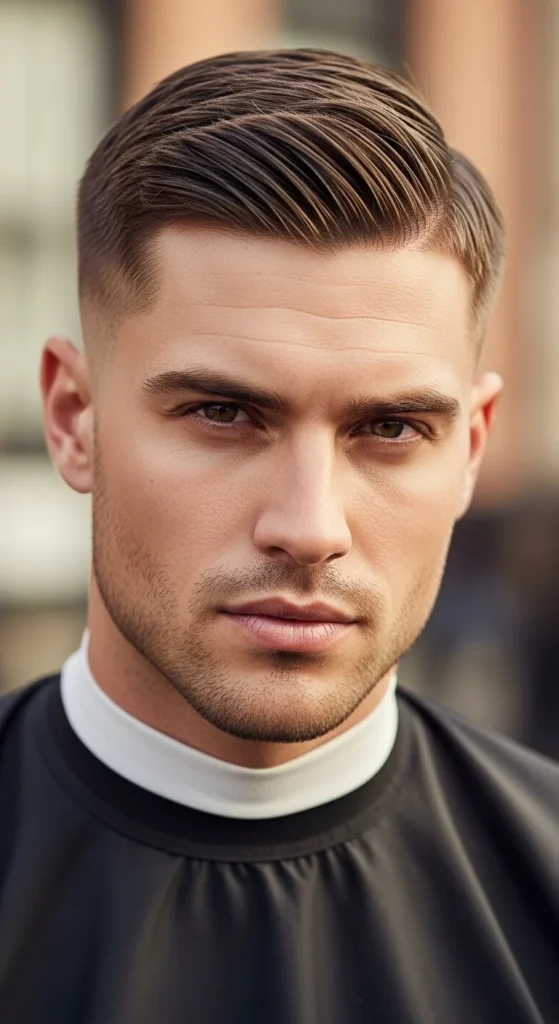
Incorporating a side part into a crew cut adds a dash of refinement—think of it as turning a functional haircut into a tailored style. The defined parting organizes the hair and introduces a polished silhouette that’s particularly well-suited to professional environments and formal occasions. A side-parted crew reads classic and versatile: it can be sleek and neat for business meetings or softened with texture for evening wear. The part also helps in guiding irregular hair growth patterns, making it a practical choice for men seeking order in their styling.
To style, outline the part with a fine-tooth comb and finish with a light-hold pomade to keep the separation tidy while maintaining natural movement. This look complements oval and rectangular faces, especially when the part is aligned to accentuate your strongest facial angle, and it works across hair thicknesses provided the top retains enough length to be parted.
13. Crew Cut with Quiff

Blending a quiff into a crew cut gives the top an athletic yet dapper presence; the raised front adds noticeable height and vintage cool, while the crew’s tapered sides keep the overall silhouette controlled and masculine. This hybrid is excellent if you want a haircut that reads fashion-savvy but still remains practical for daily life. The quiff introduces an element of showmanship to an otherwise modest cut, making the hairstyle suitable for moments when you want to look put-together with minimal fuss.
Styling requires a blow dryer and heat protectant to build volume at the front, then shaping with a medium-hold paste to lock the quiff in place while preserving movement — the rest of the top can keep a natural texture to avoid an overly stiff finish. This version flatters men with medium to thick hair who want to elongate the face, and frequent trims will keep the quiff defined without letting the sides grow out and dilute the intended contrast.
14. Cropped Crew Cut
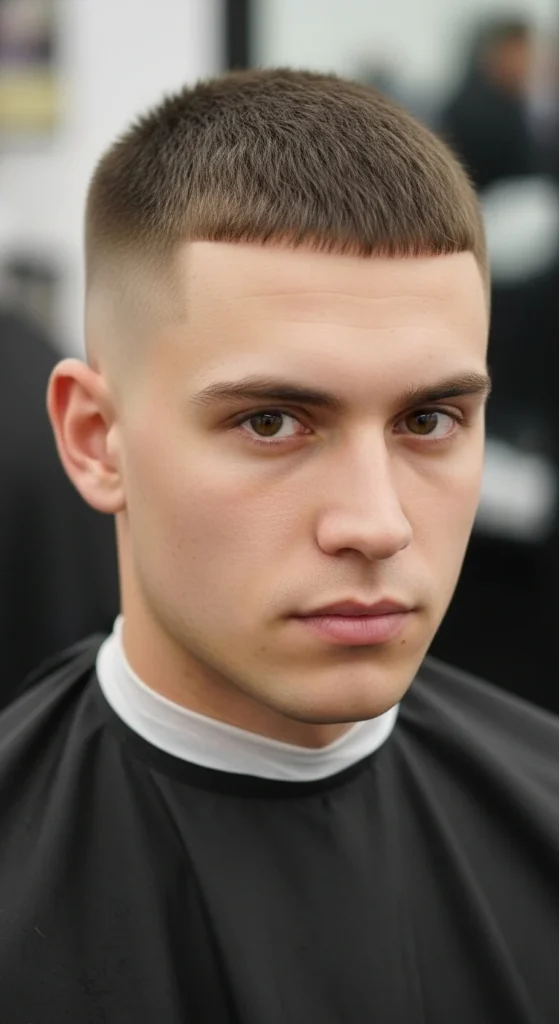
The cropped crew cut is extremely short on top but retains the tapered sides and defined shape that make the cut recognizable; it’s rugged, modern, and practically maintenance-free. This cut works brilliantly for men with active lives or those who prefer a minimalist grooming routine because you can wake up, towel-dry, and go without worrying about product or shaping. Despite its brevity, the cropped crew remains stylish when executed well — the haircut’s clean lines and sharp fade communicate intentionality and confidence.
To maintain the cropped crew, expect frequent trips to the barber every three to four weeks and use a gentle moisturizer to prevent the scalp from looking dry; the compact length is flattering for round and oval faces where it streamlines the head shape. For those with thinning hair, the cropped approach can also disguise density issues by standardizing length and minimizing contrast caused by patchiness.
15. Crew Cut with Temple Fade

A temple fade integrated into a crew cut adds subtle flair by narrowing the profile around the temples and then blending the top into a neat taper — the result is a refined, contemporary haircut that accentuates the natural contours of the head. This style reads modern and precise without being showy, and it’s especially useful if you want to emphasize cheekbones and jawlines because the temple fade creates clean negative space near the face. It’s an understated way to add personality to a conservative crew cut while retaining a polished finish.
Styling is minimal: a light texturizing cream and finger shaping are usually sufficient to maintain the fresh look; the temple fade is the real visual detail, so upkeep is about preserving clean lines. Men with square or angular faces will find the temple fade enhances their bone structure, while softer face shapes can benefit from the added definition the fade provides.
16. Curly Crew Cut
The curly crew cut respects natural curl patterns while translating the tidy crew silhouette into a texture-friendly version that emphasizes bounce and definition. Leaving the curls slightly longer on top while tapering the sides provides a balanced shape that showcases natural movement without appearing unruly. This cut is tailor-made for men who want to embrace their curls but still prefer a compact, wearable haircut that doesn’t demand excessive detangling or product layering. The result is playful, masculine, and unmistakably personal.
Styling focuses on moisture and definition: use a curl cream or light gel on damp hair and diffuse on low heat or air-dry while scrunching to preserve curl shape; avoid heavy products that weigh down the coils. Curly-haired men will want more frequent conditioning treatments to keep the curls elastic and the short silhouette clean, and regular trims will prevent the top from ballooning while maintaining a pleasing crew shape.
17. Wavy Crew Cut

The wavy crew cut uses the natural undulation of wavy hair to add an organic softness to the otherwise precise crew silhouette, resulting in a look that’s relaxed yet groomed. Waves add volume and texture without length, which helps the top avoid looking flat and brings a casual, Mediterranean charm to the cut. It’s a brilliant choice for men who want an approachable, textured appearance that doesn’t require stiff styling or heavy products. The wavy variation bridges neatness with a casual, tactile finish that reads effortless.
To style, apply a lightweight mousse or salt spray and either air-dry while raking your fingers through the hair or diffuse on low heat for added lift; finish with a matte cream for a natural hold. This cut complements oval and rectangular faces and offers a youthful, easygoing vibe that translates well across both formal and informal settings.
18. Layered Crew Cut

Inserting subtle layers into a crew cut creates dimensionality that prevents the hairstyle from appearing one-note, adding internal movement and the illusion of density. Layers can be especially advantageous for men whose hair is uneven in thickness, as skillful layering balances thin spots and builds shape. This approach transforms a simple clipper cut into something sculpted and directional, offering the kind of visual interest that separates an amateur cut from a barber-grade style. It’s a quietly technical update that pays off in daily wear.
Styling a layered crew requires a light texturizer and gentle finger styling to showcase the layered transitions without making them appear choppy; discuss with your barber how aggressive you want the layering so it suits your hair’s natural fall. Men with medium to thick hair will see the most benefit from layers because they can manipulate the mass to sit more playfully on the head while preserving a groomed silhouette.
19. Spiky Crew Cut
A spiky crew cut adds a youthful, edgy energy by encouraging small vertical spikes across the top that catch light and create kinetic texture. The spikes are typically short and controlled, ensuring the cut remains office-appropriate while injecting personality and movement. It’s an especially effective option for men who want to appear energetic and contemporary without radical length changes; the spikes read fashionable and intentional rather than juvenile when executed with matte products.
To style, use a firm-hold paste or wax and pinch small sections upward, varying the direction slightly for a natural, lived-in effect; avoid shine to keep the look modern. The spiky crew suits square and oval faces best, offering a nice counterpoint to softer jawlines and adding perceived height that elongates the face subtly.
20. Disconnected Crew Cut
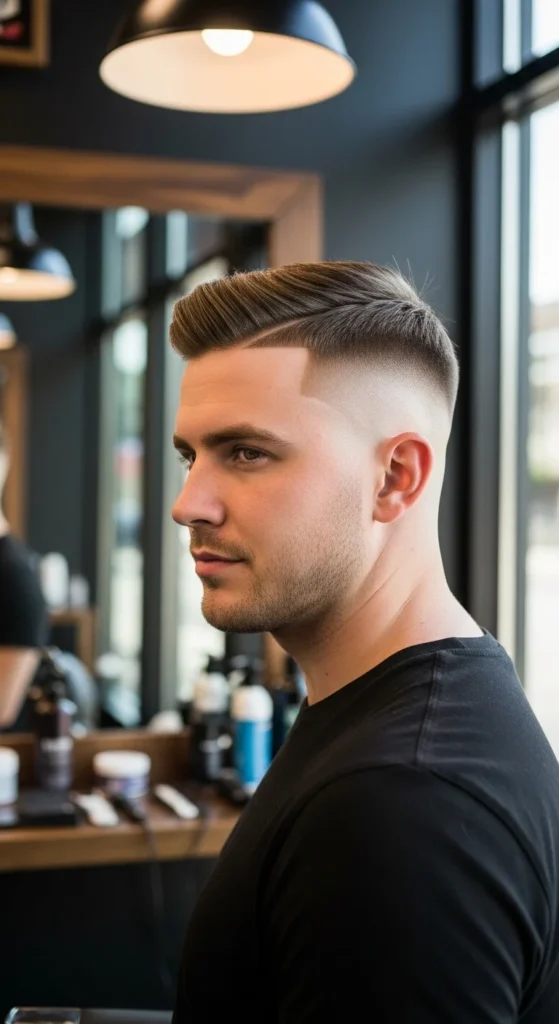
The disconnected crew cut creates deliberate contrast by maintaining a proportionally longer top while allowing the sides to remain short with a pronounced break in length. The intentional disconnection reads bold and sculptural, and it’s a great way to introduce modern architecture into a traditional silhouette. This style suits men who want a statement without full-on undercut drama — it’s controlled yet expressive, perfect for those who want to stand out with a refined edge.
Styling the disconnected crew requires a medium-hold product to shape the top and emphasize the contrast; regular trims to the sides will preserve the disconnect’s impact. This cut works best on medium to thick hair, where the longer top can maintain presence and the shorter sides can act as a clean frame to the face.
21. Crew Cut with Disconnected Sides and Beard Line
Pairing a disconnected crew with a defined beard line elevates the haircut into a full facial framing strategy that simultaneously emphasizes hair texture and beard architecture. The disconnected sides draw attention to the top’s length and movement while the beard anchors the lower face, producing a cohesive, masculine silhouette that reads both intentional and personal. It’s a contemporary grooming move that appeals to men who think of the haircut as part of an overall style composition rather than an isolated element.
To maintain cohesion, ensure the beard’s cheek and necklines are kept crisp and proportionate to the stacked contrast of the haircut, and use a medium-hold product to keep the top shaped without stiffness. This look works particularly well for men with full beards and medium-length hair tops where the interplay between hair and facial hair creates a strong identity.
22. Crew Cut with Tapered Nape
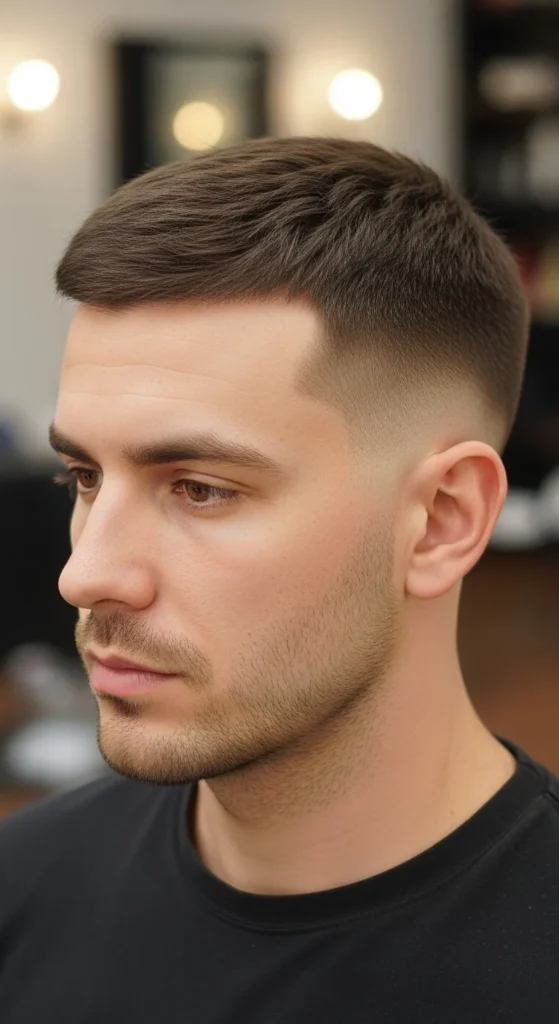
A tapered nape softens the backline of a crew cut for a neater, more refined finish that’s comfortable under collars and great for polished appearances. The tapering at the nape blends the haircut into the neck subtly, removing any harsh blockiness that can make short cuts look blunt or dated. This refinement is especially appreciated in professional settings where the silhouette under a shirt collar matters, and it adds an element of craftsmanship that separates a basic cut from a high-quality one.
Styling is mostly about upkeep — keep the nape neat and the top textured or smoothed depending on your preferred finish; a tapered nape pairs well with both matte and slightly glossy products. Men with rounder necks or heavier collars benefit from the taper because it softens transitions and enhances the haircut’s overall silhouette.
23. Crew Cut with Natural Part
A natural part integrated into a crew cut uses the hair’s innate growth patterns to guide styling, creating a look that feels organic and easy rather than overly constructed. Rather than forcing a hard line, this approach celebrates the way your hair wants to sit and translates that into a low-effort, authentic aesthetic. It’s ideal for men who prefer minimal styling but still desire a considered appearance — the natural part helps define movement and showcase your hair’s natural tendencies.
Styling this variant involves little more than working a light cream or mousse through damp hair and combing with the grain to accentuate the part; the barber’s work is in shaping the top so the natural fall looks intentional. It suits most hair types and is particularly flattering on men whose hairline or cowlicks make forced parts hard to maintain, providing a realistic and wearable crew cut solution.
24. Crew Cut for Receding Hairlines

The crew cut is an excellent ally for men with receding hairlines because the short, tapered top and controlled sides minimize the contrast between the forehead and the hair, creating a cohesive head shape that draws attention away from thinning zones. By keeping the top short but textured, the hairstyle can disguise patchiness and reduce the visual impact of recession while still appearing stylish and contemporary. This approach is practical and empowering — it’s a strategic haircut that emphasizes what remains rather than mourning what’s gone.
Styling focuses on texture and matte finishes to avoid highlighting the scalp; products like texturizing powders and fiber pastes build small-scale volume that distracts from receding areas. Regular shorter trims maintain uniformity, and some men complement the cut with a tidy beard or stubble to balance their facial proportions and further shift focus away from the hairline.
25. Classic Military Crew (Regulation Cut)
The classic military crew or regulation cut is the pared-back extreme of crew-cut variations — immaculately short with a strict taper and zero ambiguity. It’s the epitome of functional grooming and communicates discipline, resilience, and a no-nonsense approach to style. While it’s less forgiving for those who want texture and movement, it’s the ultimate low-maintenance choice for men who prefer clarity and efficiency in their appearance. This cut is timeless, practical, and carries a dignified, understated masculinity that few other haircuts can rival.
There’s minimal styling needed beyond keeping the hair and scalp healthy with conditioning and regular trims; the upkeep is more about schedule than daily product use. The military crew suits a broad range of face shapes but especially benefits strong, angular features where the severe lines accentuate natural bone structure and project confidence.
Maintenance Tips for Crew Cuts
Crew cut hairstyles for men reward consistency: frequent trims every three to five weeks keep the silhouette sharp and prevent the top from losing its intended proportion relative to the sides. Use lightweight products that enhance texture without weighing hair down—matte clays, fiber pastes, and texturizing powders are your best friends because they provide separation and hold with a natural finish. Hydration matters even for short styles; a weekly conditioning treatment and occasional scalp exfoliation will keep follicles healthy and the hair looking vibrant rather than dull or brittle.
For daily styling, learn which tool works best for your chosen crew variation — a blow dryer for lift on longer tops, a quick rub-in of product and finger shaping for textured cuts, or virtually nothing for high-and-tight and regulation crews. Also, match your hair maintenance schedule to your lifestyle: the more sculpted the cut (hard parts, skin fades, disconnects), the more frequent the barber visits needed to preserve the detail; simpler crew cuts tolerate longer gaps but still benefit from routine tidy-ups.
FAQs About Crew Cut Hairstyles for Men
Q1: Are crew cuts suitable for all hair types?
Yes—crew cuts can be adapted for straight, wavy, and curly hair by adjusting top length and texturizing techniques; the barber’s skill in layering and tapering determines how well the cut translates to your texture.
Q2: How often should I trim my crew cut?
Expect to trim every three to five weeks to keep the shape and taper consistent; versions with skin fades or hard parts need more frequent touch-ups to look crisp.
Q3: Which face shapes suit crew cuts best?
Crew cuts are versatile, but they particularly flatter square, oval, and rectangular faces—variations like added height on top or tapered sides can be used to balance rounder faces.
Q4: What products work best for crew cuts?
Matte clays, fiber pastes, texturizing powders, and light creams depending on desired finish; avoid heavy oils for textured or fine hair to prevent flattening.
Final Thoughts
The crew cut proves time and again that simplicity can be stylish when crafted with precision and an eye for detail. Whether you prefer the stripped-back efficiency of a regulation cut or the modern flair of a textured, faded crew, there’s a version that aligns with your lifestyle, face shape, and grooming philosophy. The haircut’s adaptability is its greatest strength: small changes in length, texture, or taper can transform the vibe from strictly functional to fashionably bold.
If you’re considering a change, bring a photo to your barber and discuss which crew cut variant suits your hair density, growth patterns, and maintenance tolerance; the right adaptation will make the crew cut feel custom to you. Ultimately, the most convincing crew is the one that fits your daily routine and amplifies your confidence—clean lines, considered texture, and consistent upkeep will keep the haircut looking sharp and unmistakably masculine.
