



You stare at your reflection wondering why your straight hair always looks flat and lifeless. While your friends with curly or wavy hair seem to roll out of bed looking effortlessly cool, you struggle to create any texture or volume that lasts longer than an hour.
This frustration hits thousands of men every morning. Straight hair presents unique challenges that most barbers and style guides completely ignore. The assumption that straight hair is easier to manage is actually dead wrong.
The real problem is that most men with straight hair follow advice meant for other hair types. They use heavy products that weigh down their strands or choose cuts that emphasize the natural flatness instead of working against it. Generic styling tips create the exact opposite of what straight hair needs.
This guide reveals 16 straight hairstyles that transform lifeless locks into sharp, intentional looks. Each style includes the exact barber instructions and specific products that make the difference between amateur and professional results.
By the end of this article, you will have a complete blueprint for making your 16 straight hairstyles men can master look incredible every single day.
The Evolution of Modern Straight Hair Styling
Straight hair styling has undergone a complete transformation in 2026. Gone are the days when men with straight hair were limited to basic crew cuts or slicked back looks. Modern barbering techniques now focus on creating movement and texture within naturally straight strands.
The secret lies in strategic layering and understanding how to manipulate straight hair’s natural weight distribution. Top barbers now use point cutting and razor techniques to remove bulk while maintaining length. This creates the foundation for styles that actually hold their shape throughout the day.
1. The Textured Crop

The textured crop revolutionizes how straight hair can look with minimal effort. This cut removes weight from the top while keeping enough length to create choppy, uneven texture. The sides fade gradually into a longer top section that measures about 2 to 3 inches at the crown.
Best for: Fine to medium straight hair that lacks natural volume
Product: Baxter of California Clay Pomade for grip without shine
Pro tip: Ask your barber to use a razor on the top sections to create micro layers that catch light differently.
Face Shape: Works best for oval and square faces because the textured top adds width without overwhelming narrow features.
Tell your barber exactly this: “I want a textured crop with a mid fade on the sides and point cutting through the top to remove weight while keeping 2.5 inches of length.” The point cutting technique is crucial because it prevents the blunt lines that make straight hair look flat.
2. Modern Side Part

This updated take on the traditional side part incorporates subtle disconnection between the parted section and the sides. The length gradually increases from a skin fade up to 4 inches on top. The key difference from older versions is the soft, lived in texture rather than rigid styling.
Best for: Professional environments where classic meets contemporary
Product: Suavecito Premium Blends Pomade for flexible hold
Pro tip: Use a wide tooth comb while hair is damp to avoid creating harsh lines.
Your barber needs to hear: “Create a modern side part with a low skin fade, leaving 4 inches on top with soft layering to prevent it from looking too structured.” The soft layering prevents the helmet effect that plagues many side part attempts.
Face Shape: Perfect for rectangular and diamond face shapes as it adds horizontal width through the styled sweep.
3. Slicked Back Undercut

The slicked back undercut creates dramatic contrast between buzzed sides and sleek top length. This style requires at least 4 to 5 inches on top to achieve the proper sweep back motion. The undercut should be sharp and clean with no fade transition.
Best for: Men with naturally thick straight hair who want edge
Product: Lockhart’s Authentic Pomade for strong hold and high shine
Pro tip: Apply product to towel dried hair and use a boar bristle brush for the smoothest finish.
Communicate this to your barber: “I want a slicked back undercut with a number 1 guard on the sides and back, keeping 5 inches minimum on top with no layering.” The lack of layers is intentional because you want the weight to help the hair lay back smoothly.
Face Shape: Ideal for round and oval faces because the height and backward sweep elongate facial proportions.
4. French Crop Fade

The French crop combines a textured fringe with gradually faded sides for a balanced, masculine look. The fringe should be cut bluntly across the forehead while the top maintains 2 to 3 inches of choppy length. This creates natural movement that straight hair usually lacks.
Best for: Active lifestyles that demand low maintenance styling
Product: American Crew Forming Cream for natural texture
Pro tip: Push the fringe forward with your fingers instead of combing it for better separation.
Give your barber these instructions: “Cut a French crop with a mid fade on the sides and a blunt fringe that hits about halfway down my forehead, with choppy layers through the top section.” The blunt fringe is essential for creating the signature French crop silhouette.
Face Shape: Excellent for long and heart shaped faces as the horizontal fringe shortens facial length visually.
5. Buzz Cut Variations

Modern buzz cuts go beyond basic all over clippers. The best versions use different guard lengths to create subtle dimension. Start with a number 4 on top, blend to a 3 on the upper sides, and finish with a 1 around the ears and neckline.
Best for: Men who prefer ultra low maintenance with maximum versatility
Product: Jack Black Turbo Wash for scalp health rather than styling
Pro tip: Maintain the cut every 2 weeks to keep the proportions sharp and clean.
Tell your barber: “Create a graduated buzz cut starting with a 4 guard on top, blending to a 3 on the sides, and finishing with a 1 around the perimeter for clean definition.” This gradient approach adds sophistication to an otherwise simple cut.
Face Shape: Works universally but particularly flatters square and diamond face shapes by emphasizing bone structure.
6. Quiff with Taper Fade

The quiff transforms flat straight hair into a statement style through strategic volume creation. This requires 4 to 5 inches of length on top with shorter sides that taper gradually. The styling technique involves lifting the hair up and slightly back to create the signature wave shape.
Best for: Straight hair that needs serious volume and height
Product: Reuzel Blue Pomade for strong hold with flexibility
Pro tip: Blow dry the front section upward and backward simultaneously for maximum lift.
Your barber should hear: “I want a quiff with a taper fade on the sides, keeping 4.5 inches on top with layers cut to support upward styling.” The layers are crucial because they reduce weight that would otherwise pull the quiff down.
Face Shape: Perfect for round and square faces as the vertical height balances wider facial proportions.
7. Caesar Cut

The Caesar cut brings the hairline forward through a short, textured fringe that covers potential problem areas. Keep the overall length between 1 to 2 inches with subtle layering throughout. The sides should be shorter but not drastically different from the top length.
Best for: Receding hairlines or thin areas that need camouflage
Product: Hanz de Fuko Claymation for matte texture
Pro tip: Style the fringe with slight forward movement to create the illusion of thicker hair.
Instruct your barber: “Cut a Caesar with 1.5 inches on top, subtle layering throughout, and sides that are only slightly shorter to maintain the overall balanced length.” The subtle length variation prevents harsh lines while maintaining the Caesar’s characteristic forward styling.
Face Shape: Suits all face shapes but especially helps long faces appear more proportional through the horizontal fringe.
8. Ivy League

The Ivy League bridges the gap between a crew cut and longer styles through precise tapering and classic proportions. The top measures 2 to 3 inches with a natural part that can be styled to either side. The graduation from top to sides should be seamless and professional.
Best for: Conservative professional environments with style requirements
Product: Layrite Super Hold Pomade for all day control
Pro tip: Use a small amount of product and build up coverage rather than applying too much initially.
Tell your barber: “Create an Ivy League cut with 2.5 inches on top, natural tapering down the sides and back, and shape it so I can part on either side.” The versatility in parting direction makes this style adaptable to different occasions.
Face Shape: Flatters oval and rectangular faces by maintaining balanced proportions without extreme length or height.
9. Brushed Forward Style

This style embraces forward movement instead of fighting natural growth patterns. The cut maintains 3 to 4 inches on top with gradual tapering toward the sides. The styling involves brushing everything forward and slightly to one side for a casual, approachable look.
Best for: Men with cowlicks or difficult growth patterns
Product: Bumble and Bumble Sumotech for flexible texture
Pro tip: Work against your natural growth pattern when applying product for better hold and direction.
Give your barber this direction: “Cut for a brushed forward style with 3.5 inches on top, gradual tapering on the sides, and shape the front to allow forward styling without looking messy.” The shaping prevents the forward brush from creating an unkempt appearance.
Face Shape: Works well for heart and diamond shaped faces by adding width to the lower portion through forward movement.
10. Disconnected Undercut

The disconnected undercut creates stark separation between long top sections and buzzed sides without any blending. This requires commitment to regular maintenance but delivers maximum impact. Keep 4 to 6 inches on top while buzzing sides to a number 1 or 2 guard.
Best for: Straight hair that needs dramatic contrast and edge
Product: Shear Revival Crystal Lake for strong hold and shine
Pro tip: Maintain sharp lines by trimming the disconnect every 3 weeks.
Your barber needs to understand: “Create a disconnected undercut with 5 inches on top and number 2 sides with no fade or blending between the sections.” The lack of blending is what creates the dramatic disconnected effect.
Face Shape: Best suited for oval and square faces that can handle the dramatic contrast without appearing unbalanced.
11. Messy Textured Style

This intentionally tousled look relies on strategic cutting to create movement within straight hair. The barber removes weight through point cutting while maintaining 3 to 4 inches of varied length. The result appears effortless but requires specific techniques to achieve.
Best for: Casual environments that allow creative expression
Product: Ouai Matte Pomade for separation and definition
Pro tip: Apply product to dry hair and scrunch sections randomly for natural looking texture.
Communicate this: “I want a messy textured cut with 3.5 inches on top, point cutting throughout to create uneven lengths, and sides that blend naturally without being too clean.” The point cutting creates the irregular lengths that make styling look spontaneous.
Face Shape: Ideal for angular faces including square and diamond shapes as the soft texture balances sharp features.
12. Classic Crew Cut

The crew cut remains popular because it works with straight hair’s natural tendencies rather than against them. Modern versions incorporate subtle tapering and careful attention to proportions. Keep the top between 1 to 2 inches with gradual shortening toward the crown.
Best for: Active lifestyles and humid climates
Product: American Crew Fiber for light hold and natural finish
Pro tip: Ask for extra attention to the front hairline to avoid the bowling ball effect.
Tell your barber: “Cut a classic crew cut with 1.5 inches in front tapering to 1 inch at the crown, with natural blending on the sides and extra attention to the hairline shape.” The tapering prevents the flat top appearance that makes crew cuts look dated.
Face Shape: Universally flattering but particularly good for round faces as it adds vertical emphasis through the slightly longer front.
13. Swept Back Pompadour

The pompadour requires significant length and commitment to styling but delivers unmatched sophistication. This style needs 5 to 6 inches on top with shorter, blended sides. The key is creating height and backward sweep without looking artificial.
Best for: Formal occasions and vintage inspired looks
Product: Royal Crown Pomade for traditional hold and shine
Pro tip: Use a round brush while blow drying to create the foundational volume before adding product.
Your barber should hear: “Create a pompadour with 5.5 inches on top, gradual fade on the sides starting high, and cut the top to support backward and upward styling.” The high fade starting point prevents the sides from competing with the dramatic top volume.
Face Shape: Perfect for long and rectangular faces as the height and volume create better facial proportions.
14. Short Textured Fringe
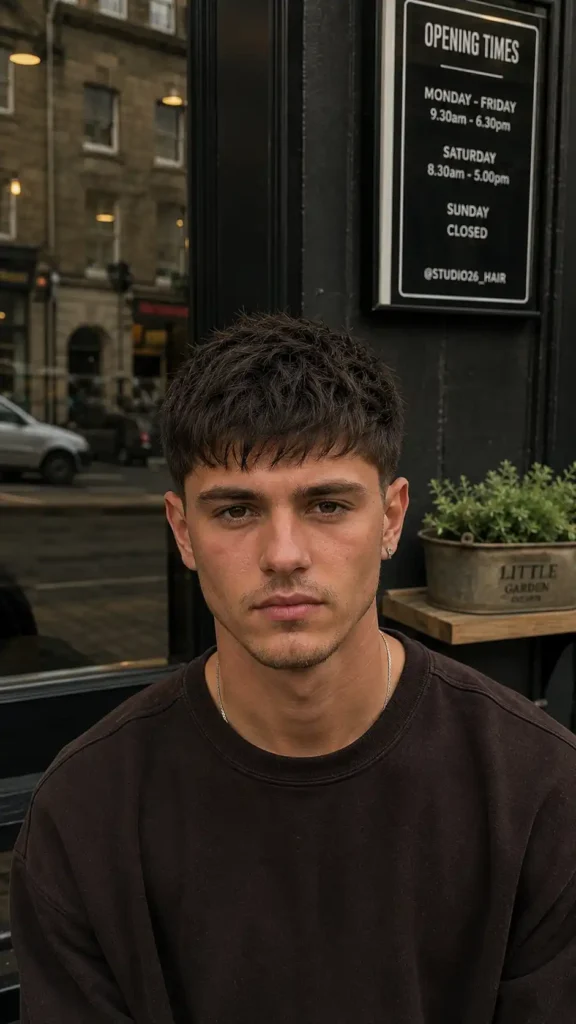
This contemporary take on fringed styles incorporates texture and movement into a short, manageable length. The fringe should hit mid forehead while the top maintains 2.5 to 3 inches with choppy layers throughout. The sides fade cleanly without being too dramatic.
Best for: Young professionals who want modern edge
Product: Redken Brews Texture Pomade for flexible definition
Pro tip: Style the fringe with slight separation between sections rather than combing it straight across.
Instruct your barber: “Cut a short textured fringe with the fringe hitting mid forehead, 3 inches on top with choppy layers, and a mid fade on the sides for clean contrast.” The choppy layers prevent the fringe from looking too blunt or juvenile.
Face Shape: Excellent for oval and heart shaped faces as the fringe adds width to narrow foreheads.
15. Skin Fade Combover

The skin fade combover combines classic styling with modern cutting techniques. One side is buzzed down to skin level while the other maintains 4 to 5 inches for dramatic sweeping. The transition should be gradual despite the extreme length difference.
Best for: Men who want sharp contrast with professional appeal
Product: Suavecito Firme Hold Pomade for all day control
Pro tip: Start the part higher than you think necessary to account for how the hair will settle.
Tell your barber: “Create a skin fade combover with a hard part, skin fade on one side gradually blending up to 4.5 inches on the longer side.” The hard part creates definition between the faded and longer sections.
Face Shape: Works best for round and square faces by creating asymmetrical interest that draws attention upward.
16. Natural Flow

This relaxed style works with longer straight hair by adding subtle layers and shaping without dramatic length changes. The cut should remove weight from the interior while maintaining 4 to 6 inches throughout. The result looks effortlessly grown out but deliberately shaped.
Best for: Longer straight hair that needs shape without losing length
Product: Oribe Rough Luxury Soft Molding Paste for subtle texture
Pro tip: Air dry whenever possible to maintain the natural movement that blow drying can eliminate.
Give your barber these instructions: “Create a natural flow cut with 5 inches throughout, internal layering to remove weight, and subtle shaping around the face and neckline.” The internal layering is key to preventing the heavy, flat appearance that longer straight hair often develops.
Face Shape: Flatters most face shapes but particularly good for angular features that benefit from the softening effect of longer, flowing hair.
Quick Comparison Table
| Style | Length | Hair Type | Maintenance | Bold Factor |
|---|---|---|---|---|
| Textured Crop | Short-Medium | Fine-Medium | Low | ★★ |
| Modern Side Part | Medium | All Types | Medium | ★ |
| Slicked Back Undercut | Long | Thick | Medium | ★★★ |
| French Crop Fade | Short-Medium | All Types | Low | ★★ |
| Buzz Cut | Very Short | All Types | Very Low | ★ |
| Quiff with Taper | Long | Medium-Thick | High | ★★★ |
| Caesar Cut | Short | Fine-Medium | Low | ★ |
| Ivy League | Medium | All Types | Medium | ★ |
| Brushed Forward | Medium | All Types | Low | ★ |
| Disconnected Undercut | Long | All Types | High | ★★★ |
| Messy Textured | Medium | All Types | Low | ★★ |
| Classic Crew Cut | Short | All Types | Very Low | ★ |
| Swept Back Pompadour | Long | Thick | Very High | ★★★ |
| Short Textured Fringe | Short-Medium | All Types | Medium | ★★ |
| Skin Fade Combover | Medium-Long | All Types | High | ★★★ |
| Natural Flow | Long | Medium-Thick | Medium | ★ |
Frequently Asked Questions
What are the best straight hairstyles men can choose for professional settings?
The Ivy League, modern side part, and classic crew cut work best in conservative professional environments. These styles maintain clean lines while offering enough character to avoid looking generic.
How often should I trim my straight hair to maintain these styles?
Most of these cuts need touching up every 3 to 4 weeks to maintain their shape. Styles with fades or undercuts may need attention every 2 to 3 weeks for optimal appearance.
Can fine straight hair pull off longer styles like the pompadour?
Fine straight hair can work with longer styles but needs specific cutting techniques and stronger hold products. The key is removing internal weight while maintaining enough length to create the desired shape.
What styling products work best for straight hair?
Clay based pomades and matte finish creams typically work better than heavy gels or oils. Straight hair needs grip and texture rather than weight that will flatten the style.
How do I add volume to naturally flat straight hair?
Blow drying with a round brush, using volumizing products on damp hair, and choosing cuts with strategic layering all help create lift. The styling technique matters as much as the product choice.
Final Thoughts
These 16 straight hairstyles men can master prove that naturally straight hair offers incredible versatility when cut and styled correctly. The key lies in choosing cuts that work with your hair’s natural behavior rather than fighting against it.
Remember that the right barber makes all the difference. Find someone who understands straight hair specifically and can execute the precise cutting techniques these styles require. The exact words you use when communicating your desired look matter just as much as the cut itself.
With the right approach, your straight hair becomes an asset rather than a styling challenge. These proven styles deliver consistent results that will transform your daily routine and boost your confidence.
Save this pin for your next barbershop visit and never struggle with flat, lifeless hair again.
Style Worth Pinning. Every Single Time.
Follow StyleObsidian for daily style inspiration.
